Seabrook Texas Town
Welcome to the Nature of Seabrook
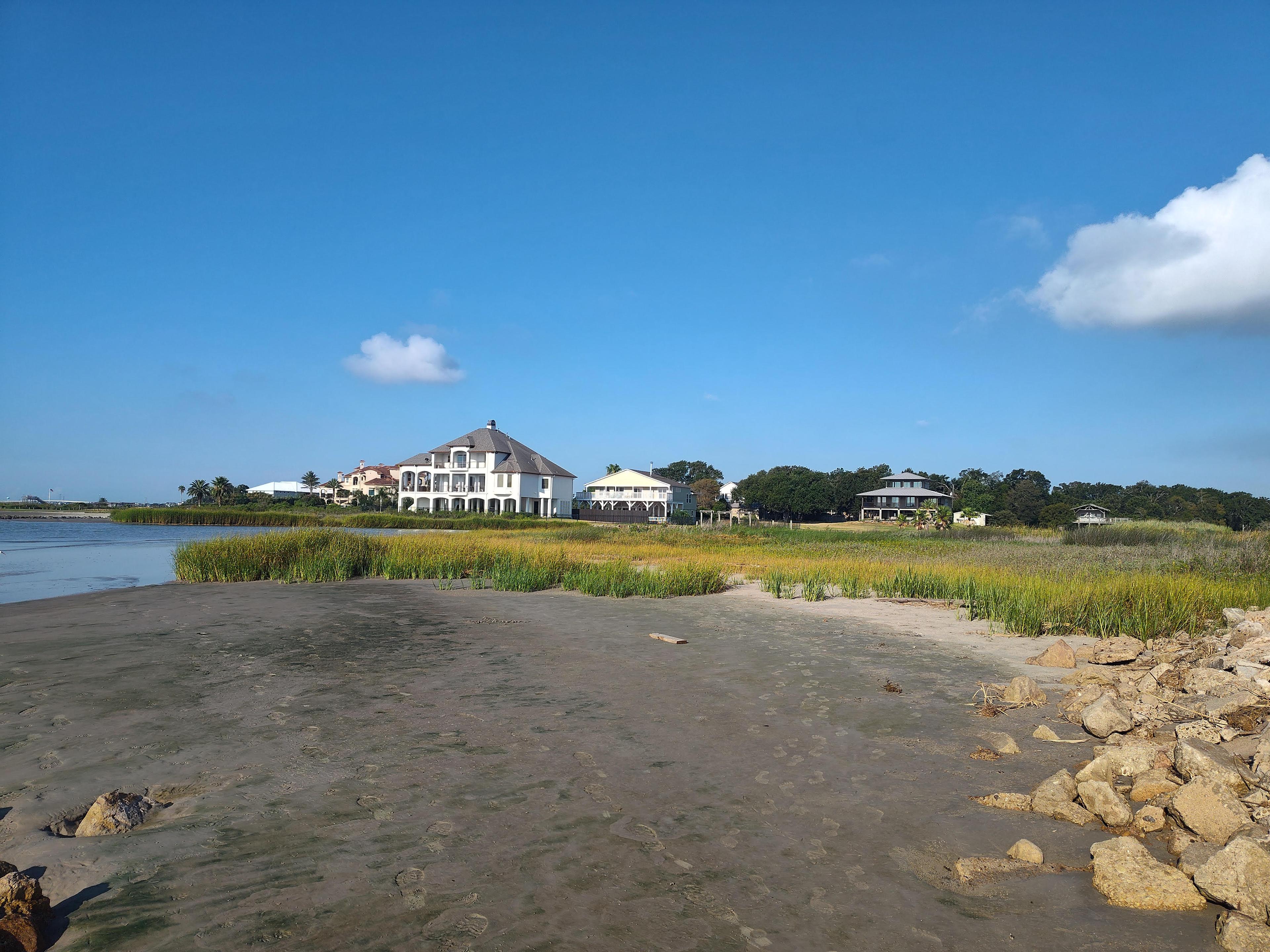
Wetland, woodland, bayou, shoreline and open water — all meeting within a relatively small stretch of the Texas Gulf Coast.
Press play — your introduction to the Nature side of Seabrook Texas Town.
The nature of Seabrook
Scroll inside to read on.
WELCOME TO THE NATURE OF SEABROOK
There is a side of Seabrook, Texas that begins when you stop looking only at the streets, homes, restaurants, businesses and waterfront activity and start looking at everything living around them.
Look toward Galveston Bay.
Look into the marsh.
Look beneath the old oaks.
Watch the shoreline.
Listen beside the bayou.
Notice the birds moving overhead.
Notice the water changing with the wind.
Notice the butterflies, dragonflies, turtles and the quiet movement that can happen beside a trail when you simply slow down long enough to see it.
Seabrook is a waterfront community, but its natural identity is much bigger than the water alone.
It is a place where wetland, woodland, bayou, shoreline, open water, coastal vegetation and wildlife all meet within a relatively small area.
That is what makes the Nature experience of Seabrook Texas Town so important.
We do not want to introduce Seabrook as a place with a few parks and a few birds.
We want to help you understand the living landscape itself.
Seabrook's nature story is the connection between land and water
The environmental story of Seabrook is not one park.
It is not one trail.
It is not one animal.
It is not one view of Galveston Bay.
It is the connection among all of them.
- Woodland gives way to wetland.
- Wetland connects with bayou.
- Bayou reaches shoreline.
- Shoreline opens into Galveston Bay.
Birds use these environments differently.
Turtles use them differently.
Deer use them differently.
Alligators use them differently.
Insects use them differently.
Marine life connects to the story beyond the shoreline.
And the visitor moves through all of those relationships without necessarily realizing how connected they are.
That is why the Nature tab is not simply about showing you wildlife.
It is about helping you understand where that wildlife belongs.
Seabrook is a bird sanctuary
One of the most remarkable parts of Seabrook's environmental identity is its relationship with birds.
The City of Seabrook identifies the community as a bird sanctuary and reports more than 300 identified bird species across fresh marsh, salt marsh, bay shoreline, riparian habitat and upland woodland.
That matters because Seabrook is also part of a much larger migration story.
A bird you watch for a few seconds over Galveston Bay may be moving through a seasonal journey that reaches far beyond Seabrook and far beyond Texas.
That small moment can connect you with something continental in scale.
A person can arrive in Seabrook for a walk, a weekend, a meal, a photograph or a quiet morning near the water and suddenly become part of a much larger ecological story simply by looking up.
That is one of the things we hope visitors begin to notice here.
Follow the landscape
Different public places in Seabrook offer different ways to experience nature.
McHale Park opens toward Galveston Bay and the waterbird side of the community.
Hester Garden Park brings the experience closer, with woodland, ponds, streams, butterflies, dragonflies and birds.
Pine Gully Park creates one of the clearest transitions between woods, wetland, trail, shoreline and Galveston Bay.
Robinson Park brings you beneath old oaks and into woodland edge associated with migrant birds.
The Seabrook Wildlife Refuge offers a quieter experience in an area maintained largely in natural condition.
Each place adds something different.
Together they begin to show the larger picture.
Pine Gully helps explain the connection
Pine Gully is a good example of why habitat matters.
- You can begin around woodland.
- Move along the trail.
- Reach wetland.
- Continue toward shoreline.
- Then look out across Galveston Bay.
Along the way, the environmental experience changes.
The wildlife opportunities change.
The vegetation changes.
The relationship with water changes.
This is exactly why we believe wildlife should never be separated from habitat and geography.
A species name by itself tells only part of the story.
Where it was documented matters.
The habitat matters.
The season can matter.
The source matters.
And whether the record is historical or current matters.
Nature is not scheduled
There are documented wildlife records connected with Seabrook, but that does not mean wildlife appears on demand.
You may see pelicans.
You may see herons or egrets.
You may see butterflies or dragonflies.
You may encounter turtles.
You may see white tailed deer.
An American alligator may be present in an area where the species has been documented.
The City has also reported that a bottlenose dolphin may occasionally be seen around Pine Gully.
But occasionally means occasionally.
A documented species is not a guaranteed sighting.
And that is part of what makes a real wildlife experience meaningful.
There is no schedule.
There is no performance.
There is no promise that the animal you hope to see will be waiting for you.
Come see what the landscape gives you that day.
If you want to understand the wildlife, start with the habitat
This idea sits at the center of the Nature experience.
A wildlife record becomes more useful when it is connected with place.
- Location
- Habitat
- Season
- Source
- Observation type
- Current or historical status
- Conservation context
- Regulatory context
Those connections are what turn a list of species into an environmental record.
And that brings us to STELGH.
Why STELGH is being developed
The more we began looking at Seabrook's environmental story, the more one question became important.
How do we make sure that what we tell a visitor is actually supported?
Environmental information can easily become scattered.
One source may identify a species.
Another may describe a park.
Another may preserve a historical wildlife record.
Another may explain a conservation project.
Another may contain a municipal ordinance.
Another may contain a state or federal environmental requirement.
Another may provide floodplain or wetland information.
Another may update a scientific name.
When those pieces remain disconnected, it becomes difficult to understand what is current, what is historical, what is verified, what is regional, what is local, what is regulatory and what still needs more research.
That is one of the reasons STELGH is being developed.
STELGH
SEABROOK TEXAS ENVIRONMENTAL LANDSCAPES AND GULF COAST HABITATS
STELGH is being developed as an independent environmental documentation, verification and standards framework.
Its purpose is to connect wildlife, habitat, geography, historical records, scientific information, public sources, regulatory standards, conservation and revision into a traceable environmental system.
The idea is simple.
If we tell you that a species is documented in Seabrook, we want to be able to show why.
If the record is historical, we want to label it historical.
If the record is current, we want to identify the current support.
If the information is regional but not verified specifically in Seabrook, we do not want to quietly turn it into a Seabrook record.
If something still needs review, we want that uncertainty to remain visible.
Seabrook occurrence requires Seabrook evidence
That is one of the clearest standards behind the work.
A species should not become Seabrook wildlife simply because it occurs somewhere else in Texas.
It should not become Seabrook wildlife simply because it occurs somewhere in Galveston County.
It should not become Seabrook wildlife simply because the habitat looks suitable.
A local claim should have a local evidentiary connection.
That is important for visitors.
It is important for researchers.
And it is important for the credibility of the environmental record itself.
Verified sources matter
STELGH is being structured around source quality.
Public records from the City of Seabrook can matter.
Texas Parks and Wildlife Department records can matter.
State and federal environmental agencies can matter.
Public scientific institutions can matter.
Peer reviewed scientific literature can matter.
Official GIS data can matter.
Municipal plans, ordinances, conservation records and historical wildlife inventories can matter.
But not every source carries the same weight.
A social media post is not the same thing as an agency record.
A regional species range is not the same thing as a documented Seabrook record.
A historical inventory is not the same thing as a current observation.
Those distinctions are part of the standard.
STELGH and regulatory standards
STELGH is also being developed to cross reference verified public environmental regulations, standards and agency requirements alongside environmental records.
That can include areas such as wetlands, floodplains, water quality, stormwater, shoreline management, protected wildlife, migratory birds, nesting protections, public park rules, wildlife interaction, alligator safety, coastal development, environmental permitting, conservation and public access.
The goal is not to make nature feel legalistic.
The goal is to make the information behind the Nature experience more trustworthy.
Environmental rules matter because they help define what can be protected, developed, disturbed, restored, regulated or shared.
STELGH does not create those laws or regulations.
It is not a regulatory agency.
It is not a permitting authority.
It is not a municipal department.
It does not replace the City of Seabrook, Texas Parks and Wildlife Department or any state or federal agency.
Its role is to identify, organize and cross reference applicable public information alongside the environmental record.
That distinction is important.
STELGH may reference public regulatory and scientific sources, but citation does not imply endorsement, sponsorship, partnership, certification or adoption by the issuing organization.
Not every standard means the same thing
Part of the work being developed through STELGH is the ability to distinguish among different types of authority.
A law is not the same as an agency recommendation.
An ordinance is not the same as a scientific paper.
A permit condition is not the same as a historical wildlife record.
Official guidance is not the same as a best management practice.
These things can all matter, but they do not carry the same legal or scientific weight.
The standard is being built to keep those differences visible.
What a STELGH record is intended to hold
A future STELGH environmental record may connect a common name with a scientific name, location connection, habitat, source, current or historical status, verification level, seasonality, regulatory relevance, conservation relevance, public display status, citation and revision information.
That structure matters because it helps keep information from becoming detached from its evidence.
The goal is not simply to say:
This animal lives here.
The better question is:
What supports that statement?
Where is the record from?
How old is it?
What habitat is connected with it?
Has the scientific name changed?
Is the information appropriate for public display?
What rules or protections may apply?
That is the deeper environmental standard being built.
Historical does not mean current
Seabrook has historical municipal wildlife documentation that reaches back decades.
That information is valuable.
It gives the community environmental memory.
It tells us what people documented at a particular time.
It can help future researchers compare older records with newer ones.
It can help with education.
It can help with taxonomy review.
It can help identify environmental change.
But historical evidence should remain historical when that distinction matters.
Historical record tells us what was documented.
Current record tells us what is presently supported.
Both matter.
Neither should silently replace the other.
Science changes too
Scientific names can change.
Classifications can change.
New information can change how a species is understood.
That does not mean an older record becomes useless.
It means the record needs context.
STELGH is being designed to preserve the history while allowing taxonomy and interpretation to be updated transparently.
That same principle applies to the entire environmental system.
A trustworthy standard must be willing to change when the evidence changes.
A living environmental record
STELGH is not intended to become a frozen list.
It is being designed as something that can grow.
Records may eventually include when information was added, when it was verified, which source version was used, what changed, what was superseded and what still needs review.
That allows the environmental record to develop without pretending that the first answer is always the final answer.
Uncertainty should stay visible
One of the most important things an environmental system can say is:
We do not know yet.
That is not a weakness.
It is part of responsible documentation.
Where the record is clear, we will say so.
Where the record is historical, we will label it.
Where the evidence is incomplete, we will keep that uncertainty visible.
Some information may be verified and current.
Some may be verified and historical.
Some may be regional but not yet Seabrook verified.
Some may need additional review.
Some may be sensitive.
Some may not be appropriate for public display.
That is how trust grows.
Not every location should be public
Environmental transparency also has limits.
Not every wildlife location should be placed on a public map.
Sensitive nesting areas, vulnerable habitat, breeding locations, rare species information, private property records or other protected resources may require a different level of access.
A public environmental system should never become a tool that makes wildlife easier to disturb.
STELGH is being designed around the idea that useful information can be shared without exposing everything.
The future map connection
Over time, the Nature experience may connect more closely with the Seabrook Texas Town travel map.
Visitors may be able to move from environmental information into public parks, trails, habitats, birding destinations, conservation features and other appropriate visitor locations.
But sensitive exact coordinates should not automatically become public simply because they exist somewhere in a record.
The goal should always be responsible access.
This is where STELGH and ecotourism meet
Better environmental information creates a better visitor experience.
When you understand what you are looking at, a walk becomes more meaningful.
When you know why a wetland matters, it looks different.
When you understand migration, the bird overhead becomes part of a much larger story.
When you know that a record is historical rather than current, you understand the information more accurately.
When you know the source behind a statement, you can explore further.
That is the connection between STELGH and ecotourism.
The environmental standard is not meant to pull you away from nature.
It is meant to help you understand nature more deeply when you get there.
Responsible ecotourism
Wildlife is not here to perform for us.
It is living here.
Resting here.
Feeding here.
Moving through here.
Migrating through here.
Responding to weather and seasons.
So if you come to experience Seabrook's wildlife, give it space.
Keep an appropriate distance.
Do not feed wildlife.
Do not disturb nests.
Do not approach alligators.
Keep pets under control.
Stay on appropriate public routes.
Use a long lens rather than moving closer for a photograph.
Leave habitat as you found it.
The best wildlife encounter is one where the animal can keep behaving naturally.
That is not separate from ecotourism.
That is ecotourism.
Conservation is part of the story
Seabrook's environmental history also includes conservation action.
One example is the 2019 Chimney Swift project supported by a Great Texas Birding Classic conservation grant through a project submitted by the Seabrook Open Space and Trails Committee.
The project supported two Chimney Swift towers with interpretive signage.
That matters because environmental identity is not only about what lives in a place.
It is also about how people choose to understand it, protect it, support it and teach others about it.
That is part of the Seabrook story too.
Watch the nature of Seabrook
The video on this page is your introduction to the Nature side of Seabrook Texas Town.
Press play and come with us from Galveston Bay into wetland, woodland, bird migration, public parks, wildlife records, historical documentation, conservation and the developing STELGH framework.
You will see how places such as McHale Park, Hester Garden Park, Pine Gully Park, Robinson Park and the Seabrook Wildlife Refuge each contribute something different to the larger environmental landscape.
You will see documented wildlife.
You will hear why historical records matter.
You will see why a species record should remain connected to evidence.
And you will see why habitat is the beginning of the story.
The purpose is not to give you a guaranteed wildlife checklist.
The purpose is to help you see Seabrook differently.
Maybe you are already close
Maybe you live ten minutes away.
Maybe you are planning a weekend from Houston.
Maybe you are following the Upper Texas Coast as a birder.
Maybe you are a photographer.
Maybe you are bringing your family.
Maybe you have lived nearby for years and never really looked at Seabrook this way.
Maybe you are visiting Texas from another state.
Maybe you are watching from another country and this is the first time you have ever heard of Seabrook.
However you found us, you are invited to look closer.
Come see what the landscape gives you that day
One visit will not show you everything.
And it should not.
Migration changes.
Weather changes.
Water changes.
Vegetation changes.
Wildlife activity changes.
Winter may feel different from spring.
Spring may feel different from summer.
The same trail can feel different at another time of day.
That is a reason to return.
COME BACK AND LOOK AGAIN.
Seabrook Texas Town opens the door
Seabrook Texas Town is the broader visitor doorway.
Nature is one part of the experience.
From here, you may eventually move into the travel map, parks, waterfront, history, local businesses, food, shopping, recreation, events and other parts of the community.
The Nature tab should help you understand the place before you simply move through it.
The goal is not to replace the real experience with a screen.
The goal is to prepare you for the real experience.
- Read.
- Watch.
- Explore the map.
- Then go outside.
The real experience is outside
A video can show you the habitat.
It cannot replace standing beside the water.
It cannot replace hearing birds move through the trees.
It cannot replace watching a pelican cross the bay.
It cannot replace seeing a butterfly stop long enough for you to notice it.
It cannot replace the quiet moment when you realize that the landscape around you is doing far more than you noticed when you first arrived.
That part belongs to you.
The Nature tab will continue to grow
As additional information is verified, this Nature experience is intended to continue growing.
Future additions may include more species records, updated taxonomy, habitat mapping, seasonal information, conservation projects, regulatory cross references, historical records, public source citations, educational material and new video content.
The important part is how that growth happens.
Where the record is clear, we will say so.
Where the record is historical, we will label it.
Where the evidence is incomplete, we will keep that uncertainty visible.
Where information is sensitive, protection comes before publicity.
Where new evidence changes the record, the record should change too.
This is the STELGH idea
Verify what is here.
Understand where it lives.
Know what rules apply.
Preserve the source.
Keep history identifiable.
Update the record when evidence changes.
Protect what should not be exposed.
Share what helps people understand the environment.
And then take that knowledge outside.
Walk the trail.
Look across the marsh.
Watch the water.
Listen for birds.
Come back in another season.
Notice something you missed the first time.
COME SEE IT.
COME UNDERSTAND IT.
COME RESPECT IT.
COME FOR THE WILDLIFE.
UNDERSTAND THE HABITAT.
RESPECT THE COAST.
EXPERIENCE SEABROOK.
Seabrook Texas Town opens the door.
STELGH helps explain what you are seeing.
The landscape, wildlife and water tell the rest of the story.
WELCOME TO THE NATURE OF SEABROOK, TEXAS.